In the global construction and infrastructure sector, efficiency and safety are no longer just operational metrics—they directly determine project profit margins. For decades, the Cuplock scaffolding system was the undisputed workhorse of commercial construction. Its unique circular node point allowed up to four horizontals to be locked in a single action, offering a significant upgrade over traditional tube and clamp systems.
However, as modern architectural designs grow more complex, labor costs escalate, and safety regulations tighten worldwide, a major industry shift is underway. Top-tier contractors, scaffolding rental firms, and engineering companies are systematically phasing out Cuplock in favor of the Ringlock scaffolding system.
Why are leading construction companies making this capital-intensive switch? Let’s break down the technical realities, cost efficiencies, and safety metrics that drive this industry-wide evolution.
1. Structural Ingenuity: The Node Point Revolution
To understand the superiority of Ringlock, we must look at the mechanics of the connection point—the core of any modular scaffolding system.
The Cuplock system relies on a top cup and a bottom cup. While highly effective for standard rectangular structures, it limits connections to exactly four horizontals at rigid 90-degree angles.
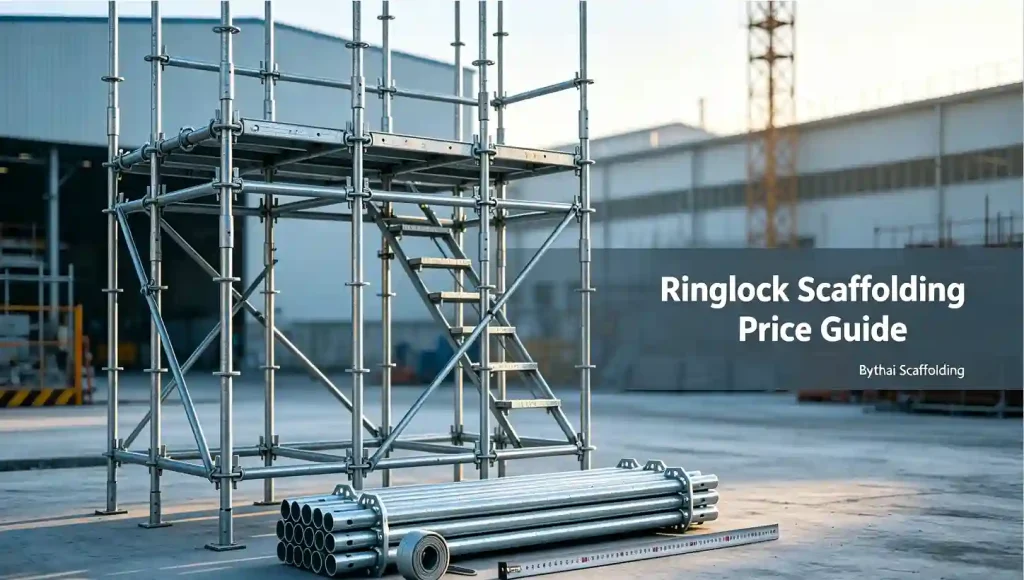
The Ringlock system utilizes a central rosette welded to the vertical standard at precise 50cm intervals. Each rosette features eight precision-engineered openings: four narrow slots for horizontals fixed at precise 90-degree angles, and four wide slots that allow horizontals or diagonal braces to be inserted at variable angles up to 180°.
This architectural flexibility means that for curved facades, industrial storage tanks, complex bridge piers, or irregular shipyards, Ringlock adapts seamlessly without requiring supplementary tube-and-clamp setups.
2. The Labor Cost Formula: Faster Assembly, Fewer Workers
Labor remains one of the largest variables in construction budgeting. Ringlock drastically minimizes assembly and dismantling times through its wedge-lock mechanism.
Inserting a Ringlock horizontal blade into the rosette slot and striking the captive wedge with a hammer creates a mathematically optimal, rigid connection. There are no loose parts to lose, and no spinning components that can become clogged with concrete over time.
Scaffolding Metric | Cuplock System | Ringlock System |
Connection Capacity | Max 4 components (Horizontals only) | Max 8 components (Horizontals + Diagonals) |
Angle Flexibility | Rigid 90° angles only | Multi-angle capability (up to 180°) |
Assembly Speed | Moderate | Fast (Up to 30-50% faster dismantling) |
Components Required | Higher (Needs extra couplers for bracing) | Minimal (Integrated bracing system) |
Structural Integrity | Prone to loosening if cup threads clog | Uncompromising geometric stability |
Major contractors report that switching to Ringlock reduces total erection and dismantling labor hours by 30% to 50%. On a mega-project spanning several months, this translates directly to hundreds of thousands of dollars saved in pure labor costs.
3. Uncompromising Safety and Load-Bearing Capacity
In high-rise construction, structural failure is not an option. Ringlock provides superior geometric stability compared to Cuplock, particularly under heavy shoring and high-load conditions.
Because Ringlock allows diagonal braces to be pinned directly into the same rosette node as the horizontals, load forces are transferred directly down the center of the vertical standard. This eliminates eccentric loading (off-center force) and significantly increases the total load-bearing capacity of the tower.
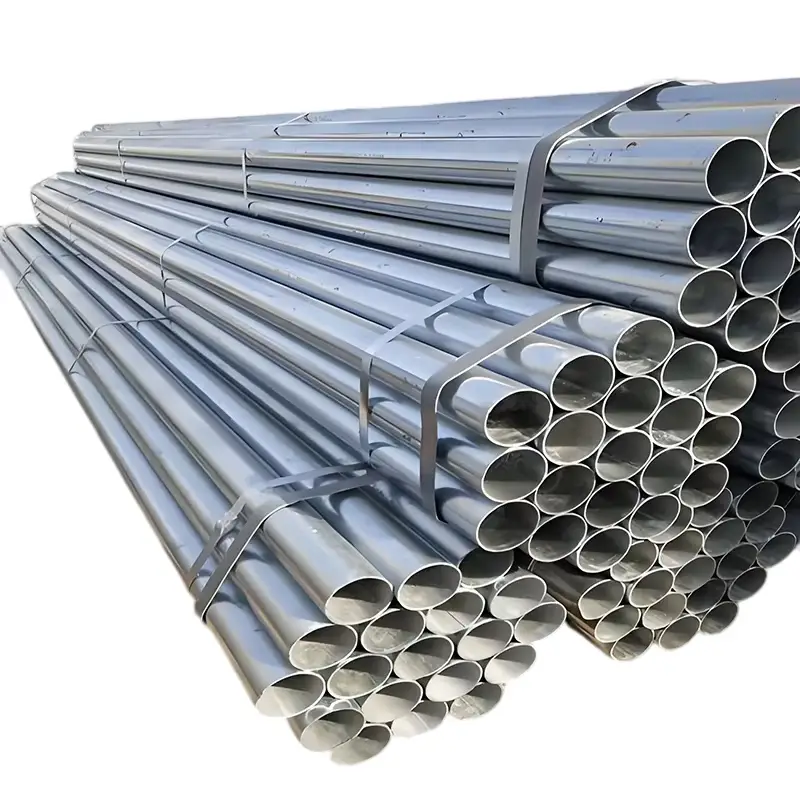
Traditional Cuplock systems are prone to rusting due to paint peeling, whereas high-performance Ringlock systems typically utilize Q355B high-strength steel and undergo a full hot-dip galvanizing (HDG) process. This treatment provides a protective zinc coating of 60 to 80 microns on both the interior and exterior surfaces of the steel tubes, completely eliminating the safety hazard posed by internal corrosion.
4. Total Cost of Ownership (TCO) and ROI Analysis
While the initial procurement cost of premium Ringlock scaffolding is slightly higher than traditional Cuplock, leading firms focus on the Total Cost of Ownership (TCO). Ringlock delivers a vastly superior return on investment (ROI) across several metrics:
Zero Loose Parts: The locking wedges are permanently riveted into the ledger and brace ends. They cannot drop out during transport, handling, or high-altitude erection, saving thousands of dollars in lost components annually.
Extended Lifespan: Thanks to hot-dip galvanization and robust rosette designs, high-quality Ringlock systems maintain their structural integrity for over 10 to 15 years, even when subjected to harsh marine, coastal, or petrochemical environments.
High Resale Value: The global market for used Ringlock is highly liquid. Should a company shift asset allocations, Ringlock inventory retains a significantly higher residual value than aging Cuplock assets.
5. Global Standardization and Regulatory Compliance
Regulatory compliance is a massive driver behind this shift. In regions governed by strict occupational health and safety standards—such as OSHA in North America and EN 12811 or BS 1139 in Europe—Ringlock has become the gold standard.
Leading manufacturers ensure their Ringlock components undergo rigorous independent testing. For international buyers, sourcing from a manufacturer that uses automated welding processes ensures every single rosette-to-pipe weld is structurally identical, eliminating human error and ensuring flawless compliance during site audits.
Conclusion: Securing Tomorrow's Competitive Edge
The transition from Cuplock to Ringlock isn’t just a trend—it’s a calculated strategy adopted by the world’s most successful construction and rental companies to protect their bottom line. By slashing labor times, maximizing onsite safety, providing unmatched engineering flexibility, and offering a lower total cost of ownership, Ringlock has firmly established itself as the future of modular access and shoring.
For companies looking to scale their operations, bid on larger public infrastructure tenders, or optimize their rental fleets, upgrading to Ringlock is the most logical next step.
Are You Planning Your Next Project Fleet Upgrade?
At Bythai Scaffolding, we manufacture globally compliant, premium Hot-Dip Galvanized Ringlock Scaffolding Systems engineered to meet strict international standards. Need technical documentation? Contact us today to request our full product catalog, steel grade certifications, and load-testing reports.