For global scaffolding distributors, private-label brand owners, and large-scale construction fleet managers, procurement is only half the battle. The real challenge begins after the sales contract is signed: international maritime logistics.
Scaffolding presents a unique logistical headache. An order rarely consists of just one item; it is an irregular mix of high-density structural steel and high-volume components. When cross-ocean freight rates fluctuate and port congestion adds unpredictable detention fees, shipping efficiency becomes the ultimate differentiator between a profitable quarter and a margin-crushing logistical nightmare.
Many international buyers view ocean freight as a fixed cost. However, top-tier global original equipment manufacturer (OEM) partners approach logistics as an engineering discipline. By strategically planning the container loading of everything from heavy Ringlock Systems to bulky Aluminum Products, it is entirely possible to slash up to 20% off total scaffolding import costs.
Here is an insider look at how smarter container loading protects your bottom line and optimizes your supply chain.
1. The Heavy Metal Dilemma: Density Balancing Across Multiple Systems
In ocean freight, maximizing container utility is a balancing act between “cubing out” (filling the volumetric capacity) and “weighing out” (hitting the legal maritime weight limit, typically around 25 to 26 metric tons for a 40′ High Cube container). Scaffolding shipments are notoriously prone to failing both poorly if unmanaged.
Consider the physical differences between the core product lines found in a typical distributor’s order:
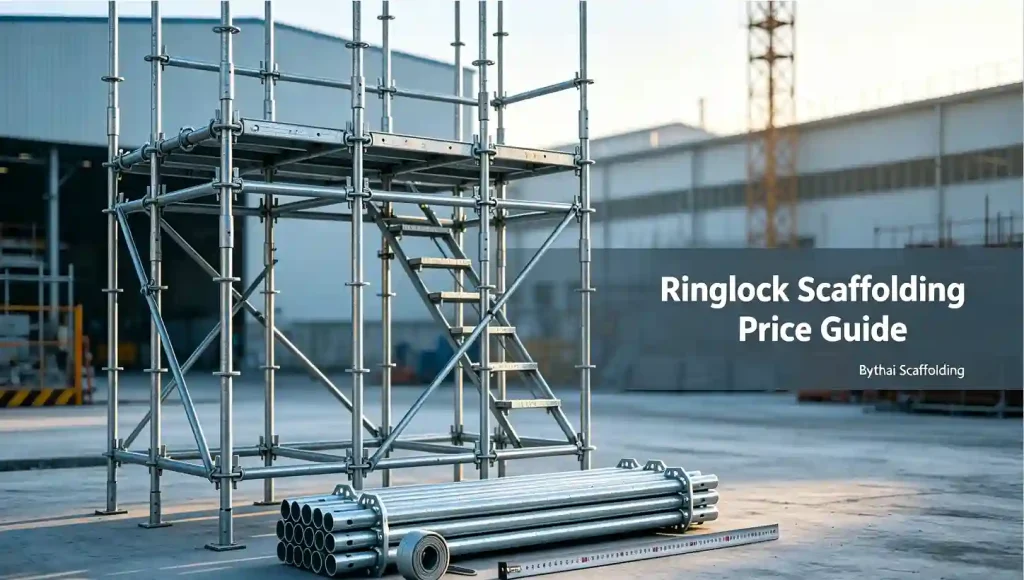
The High-Density Heavyweights: Products like Ringlock Systems, Tube & Clamp Scaffolding, and Props Shoring Systems are incredibly dense. Heavy-duty steel standards, thick-walled galvanized tubes, and solid steel shoring props will hit the legal container weight limit (usually around 26 to 28 metric tons for a 20ft container) while leaving the top half of the container completely empty.
- The High-Volume Lightweights: Conversely, Frame Systems (with their wide, hollow geometric shapes) and Aluminum Products (like aluminum planks and stairs) fill up the volume of a 40ft High Cube container long before hitting the weight limit, driving up the freight cost-per-ton.
The Cost of Inefficiency: If a factory simply loads your order chronologically as it comes off the production line, you end up paying to ship a container full of heavy steel and a separate container full of mostly trapped air.
Smarter container loading relies on Density Balancing. A sophisticated export manufacturer uses 3D load-configuration software to mathematically mix systems. By nesting high-volume hollow Frame Systems or lightweight Aluminum Products into the upper layers of a container grounded by heavy Ringlock standards or solid Shoring Props, the factory maximizes both the weight capacity and the cubic volume of a single shipment.
2. System-Specific Engineering: The Art of the Perfect "Tetris" Grid
To achieve a 20% reduction in landed costs, components cannot just be thrown into a container loose or placed on rudimentary wooden pallets that crush under heavy steel. Each product line requires its own engineered packing protocol to eliminate dead zones.
Ringlock & Tube & Clamp Bundling
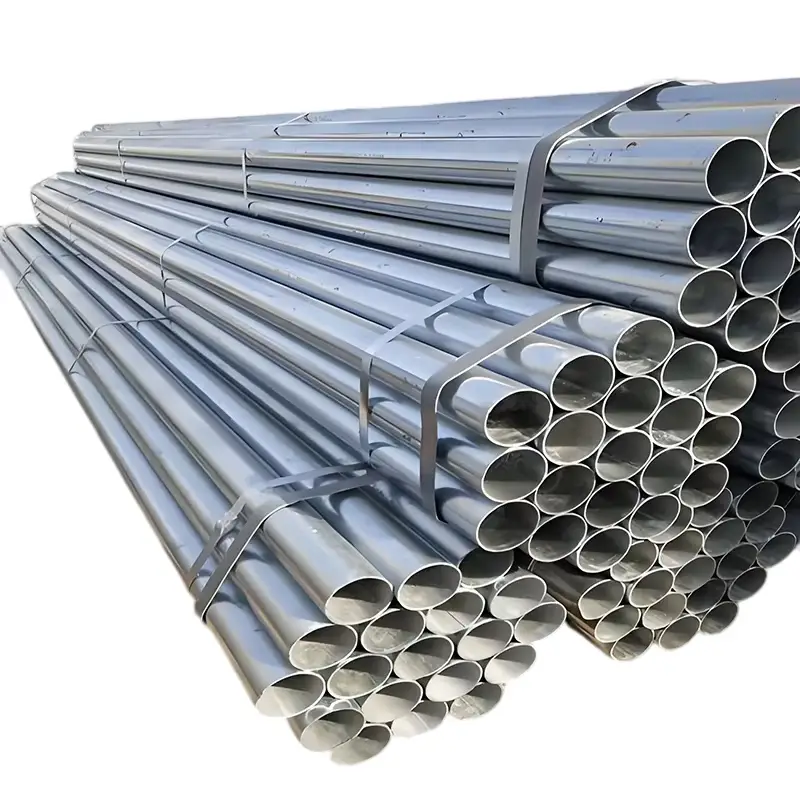
Ringlock standards, with their fixed rosettes, can easily create massive gaps if stacked poorly. Premium manufacturers design custom, heavy-duty steel racks where standards are nested tightly to eliminate overlapping rosette space. For Tube & Clamp Scaffolding, bundles of galvanized tubes are tied into precise hexagonal shapes and blocked with timber to prevent rolling or shifting during rough sea transits.
Frame & Shoring Prop Interlocking
Because frames take up a massive footprint, they are stacked using an alternating, interlocking method (one right-side-up, one upside-down). This compresses the total height of the stack by up to 15%. Heavy steel Props Shoring Systems are pre-aligned with their inner and outer tubes fully collapsed and pinned, packed into compact steel crates that can be double-stacked inside a standard container.
Utilizing the Voids with Scaffolding Accessories
Every customized scaffolding system requires thousands of small parts—base jacks, couplers, pins, ledger ends, and clamps. A smart manufacturer treats Scaffolding Accessories as the ultimate “gap fillers.” Packed into stackable mesh wire bins or heavy-duty steel crates, these accessories are strategically placed into the narrow geometric voids left right beside the large Ringlock or Frame racks. Looking for a reliable manufacturer? We don’t just manufacture premium certified Ringlock, Frames, Shoring Props, and Accessories—we engineer them to fit your local market regulations and your budget. Have your logo stamped directly on the steel and the shipping racks. Download Our Full Export Product & Packaging Catalog now!
3. Slashing the Hidden Costs: Demurrage, Detention, and Unloading Speed
When calculating import costs, the expenses do not stop when the ship docks. Some of the most punishing penalties occur at your destination port in the form of demurrage and detention fees, which pile up when you fail to return empty containers to the shipping line on time.
The antidote to port fees is unloading speed, which is entirely determined by how the factory packed the container weeks prior.
Imagine a 40’HC container arriving at your yard filled with loose, un-palletized tubes, mixed frames, and scattered bags of couplers that shifted during a 30-day ocean voyage. Unloading this manually requires a large crew working for 6 to 8 hours in unsafe conditions. This bottlenecks your yard, delays your trucks, and triggers massive detention fines from the shipping line.
Now, consider a container optimized for modern material handling: every Ringlock System rack, Frame System bundle, and crate of Scaffolding Accessories is built with built-in forklift pockets. A single forklift operator can drive into the container, lift a 2-ton rack of structural steel, back out, and repeat. The entire container can be safely unloaded in under 45 minutes.
By reducing unloading times by up to 80%, you lower local labor overhead, increase your yard’s throughput, and guarantee you never pay another dollar in port penalty fees.
4. White-Label Scaling: Job-Site Ready Mixed Shipments
For international distributors importing scaffolding under their own private-label brand name, smart container loading offers a massive commercial shortcut: Cross-Docking and Job-Site Direct Delivery.
When an export manufacturer possesses advanced logistics capabilities, they do not just pack by product type; they can pack by project kits or inventory modules.
If you have a major commercial project waiting for equipment, you can request a mixed container load that holds the exact ratio of Ringlock Systems, matching Aluminum Products (like stairs), and necessary Scaffolding Accessories required for the initial phase of construction.
When that container arrives at your domestic port, you do not need to pay for warehouse space to unload the steel, sort it, store it, and reload it onto domestic flatbeds. Instead, you can haul the container directly to your customer’s construction site. The forklift-ready steel racks can be placed right at the base of the structure, ready for erection.
When you combine custom OEM branding—such as having your logo and part numbers permanently stamped or stenciled onto the steel components and shipping racks—your inventory tracking becomes entirely automated from the moment it leaves the container.
Conclusion: Partner with a Logistics-First Manufacturer
In the global construction supply market, a cheap ex-factory price quote on steel is often a trap. If a supplier lacks the engineering capacity to properly optimize container space across diverse product lines like Ringlock, Frames, Shoring Props, and Aluminum, those initial savings will quickly vanish into wasted freight space, damaged goods, and bloated labor bills at your destination.
True cost optimization happens before the steel ever leaves the factory floor. When selecting a global manufacturing and custom-labeling partner, always look past the raw material costs and ask about their logistics engineering. Ensuring they provide 3D load optimization, custom forklift-ready racking, and smart multi-system density balancing is the most reliable way to secure your margins and keep your global projects moving seamlessly. Contact our engineering team today to request a free loading simulation for your next private-label order.