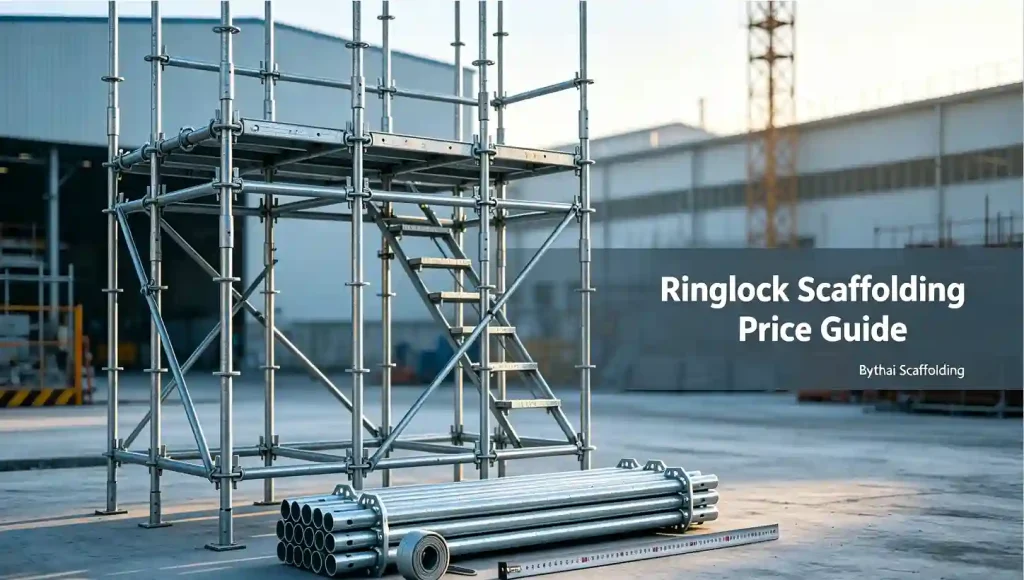
Walk onto any commercial construction site or industrial plant maintenance zone, and the first thing you notice is the towering grid of scaffolding. To an untrained eye, steel tubes, ledger heads, and rosettes look roughly the same regardless of who manufactured them. Because of this, purchasing managers facing tight site budgets are often tempted to cut costs on standard accessories—opting for cheaper wedge pins, entry-level ledger heads, or budget rosettes to trim down upfront procurement expenses.
On paper, the initial savings look great. In real-world operations, however, scaffolding accessories are where structural loads converge, where daily mechanical stress builds up, and where site crew efficiency is won or lost. Choosing low-quality component connections creates a cascading series of hidden costs that quickly wipe out those initial savings—and end up costing contractors far more over time.
1. The True Price of Upfront “Savings”
Buying scaffolding gear on unit price alone ignores total cost of ownership (TCO). A lower price tag on cast components or pressed rosettes almost always signals compromised manufacturing standards:
-
Subpar Raw Materials: Budget suppliers often use recycled or low-grade scrap steel rather than certified high-strength structural alloys like Q355 or Q235.
-
Inconsistent Manufacturing Tolerances: Poor casting molds or imprecise pressing operations produce components with slight dimensional variations.
-
Inadequate Surface Protection: Thin, uneven zinc coatings or cheap black rust-inhibitors fail rapidly when exposed to rain, salt air, and rough handling on job sites.
When you buy cheap accessories, you aren’t saving money; you are simply shifting your expenses from upfront capital expenditure to ongoing operational delays, constant replacements, and elevated site risks.
2. Inconsistent Dimensions: The Silent Killer of Labor Productivity
Labor accounts for one of the largest variables in scaffolding erection and dismantling. A well-engineered modular Ringlock system is meant to snap together quickly, with ledger heads sliding smoothly into rosettes and locking down instantly with a wedge pin.
When you use cheap, inconsistently sized accessories, that smooth workflow disappears.
Hammering and Forcing Fits
If a cast ledger head is just two millimeters off spec or cast with excess flashings, it will not seat cleanly into the rosette. Workers end up wasting valuable minutes forcing connections, hammering jam-fit parts, or searching through crates for components that actually fit together.
Disassembly Nightmares
During teardown, deformed or poorly fitted connections freeze up. Instead of a quick tap to release the wedge pin, crews have to spend extra time forcing stuck components apart.
Extra minutes spent fighting jammed connections across hundreds of joint nodes multiply into hours of billable labor. Over a multi-month project, the extra labor costs required to handle poorly fitting accessories will far exceed whatever money was saved during initial procurement.
3. Corrosion and Premature Wear: The Replacement Cycle Traps
Scaffolding hardware takes a beating. It gets dragged across concrete, stacked in muddy storage yards, and exposed to harsh weather conditions.
Properly treated components—such as accessories finished with heavy hot-dip galvanizing—develop a durable metallurgical bond that shields the underlying steel from rust and mechanical impact.
Cheap accessories cut corners on finishing:
-
Micro-Cracks and Pitting: Thin galvanizing layers flake off easily during transport, exposing raw steel to moisture. Rust builds up inside critical wedge pin slots, weakening the metal.
-
Deformation Under Load: Low-grade steel stretches or deforms when subjected to high lateral forces or repeated impact. Once a ledger head or brace head loses its original shape, it cannot safely lock into place again.
Instead of getting five to ten years of continuous service out of your hardware, low-quality accessories often need to be scrapped after just a few job cycles. Replacing 20% to 30% of your accessory inventory every year turns a “cheap” purchase into a continuous financial drain.
4. Structural Risk and Site Safety Liabilities
Scaffolding exists for one main reason: to keep workers safe while performing high-altitude work. Every ledger head, brace head, and rosette acts as a critical load-bearing node that holds the entire framework rigid. When a low-quality component fails under stress, the consequences go far beyond a broken part:
Micro-Fractures in Low-Grade Castings
Porosity and internal air pockets inside cheap cast-steel ledger heads are invisible to the naked eye. Under dynamic working loads or heavy wind shear, these micro-fractures can cause sudden, catastrophic snapping without prior warning.
Loose Structural Joints
If wedge pins or rosette slots wear down quickly, structural joints develop play. A scaffolding tower with loose connections sways excessively, creating unsafe working conditions for crews at height and risking project shutdowns by site safety inspectors.
Regulatory Fines and Work Stoppages
Modern construction sites are subject to strict OSHA, EN12811, and local safety standards. A single failed component that causes a structural shift or fall hazard can trigger immediate site shutdowns, heavy regulatory fines, legal liabilities, and lasting damage to a contractor’s reputation.
5. What to Look for in High-Performance Component Connections
To protect your workers, keep projects on schedule, and lower long-term hardware costs, insist on proven quality standards when sourcing scaffolding accessories:
Certified Steel Grades
Ensure all cast or forged components use certified structural steel (such as Q355 or Q235). High-grade steel delivers the yield strength needed to withstand heavy working loads and repeated impact without deforming.
Compliant Standards
Look for products tested and certified to recognized international safety benchmarks, such as EN12811. Compliance confirms that the component’s load capacity and manufacturing tolerances have been independently verified.
Hot-Dip Galvanization
For outdoor durability, insist on hot-dip galvanizing over basic spray paint or thin electro-plating. Hot-dip zinc coatings penetrate deep into the metal, providing long-term corrosion resistance even in coastal or industrial environments.
Precision Casting and Pressing
Components should feature clean edges, uniform dimensions, and smooth slot profiles to guarantee seamless compatibility with your vertical standards and ledgers.
Invest in Precision for Long-Term Profitability
In scaffolding management, the cheapest purchase is rarely the most economical. Low-quality accessories bring hidden expenses: wasted labor hours, frequent inventory replacements, operational delays, and severe safety risks.
By investing in high-grade, precisely engineered component connections—built with certified materials like Q355 steel and protected by hot-dip galvanizing—you ensure smooth site operations, protect your workforce, and secure a much higher return on your equipment investment.
Need Certified, Durable Ringlock Components?
At Bythai Scaffolding, we manufacture high-precision Ringlock accessories, including cast ledger heads, pressed rosettes, and brace heads engineered to EN12811 standards. Contact our technical sales team today to request a custom quotation for your next project!