In the commercial construction and industrial sectors, “working at heights” is one of the most common daily operational realities. It is also, statistically, one of the most hazardous. While heavy-duty scaffolding towers and scissor lifts are essential for prolonged overhead installations, a massive percentage of daily maintenance, inspection, and quick-access tasks rely on a much simpler tool: the industrial ladder.
However, a critical mistake many procurement managers and safety officers make is treating all ladders as simple utility items. A domestic step ladder bought from a retail hardware store is fundamentally different from a certified industrial-grade ladder engineered for a heavy-duty worksite. Using the wrong tool for the job not only risks costly compliance penalties and project delays, but it also compromises the physical safety of your crew on site.
When selecting climbing equipment for commercial, industrial, or warehouse environments, this practical guide outlines the essential factors you must evaluate to choose the right industrial ladder for your project.
Understanding Duty Ratings and Material Selection
Before looking at different styles of ladders, you must first understand what the ladder is made of and how much weight it can structurally support. In industrial environments, these two factors dictate compliance with international safety standards (such as EN131 in Europe or ANSI in the United States).
1. Material Choices: Aluminum vs. Fiberglass
Aluminum Ladders: Aluminum is the undisputed industry standard for general industrial use. It is incredibly lightweight, highly resistant to corrosion, and exceptionally durable. It is easy for a single worker to transport across a sprawling construction site. However, because aluminum conducts electricity, it must never be used near exposed electrical wiring, power lines, or active electrical installations.
Fiberglass Ladders: If your team works near electrical grids, industrial machinery, or chemical environments, fiberglass is non-negotiable. Fiberglass side rails do not conduct electricity and offer superior resistance to harsh chemicals and extreme heat. While heavier than aluminum, their safety profile makes them mandatory for electrical contractors.
2. Structural Capacity and Duty Ratings
Every commercial ladder is rated for a maximum load capacity, which includes the weight of the worker plus all their heavy tools, safety gear, and materials.
For industrial and construction sites, you should exclusively look for Heavy Duty or Extra Heavy Duty ratings (typically rated to support a minimum of 150 kg / 330 lbs). Never settle for domestic-grade ladders, which are physically not designed to withstand the daily wear and tear of a commercial job site.
Key Types of Industrial Ladders and Their Best Use Cases
Different overhead tasks require different types of physical support. Matching the specific style of ladder to the task at hand is the best way to prevent overreaching, tip-overs, and structural failures.
Ladder Type | Best Use Case | Key Safety Feature |
Step Ladder (A-Frame) | Quick, low-altitude tasks | Self-supporting, stable base |
1. Industrial Step Ladders (A-Frame)
These are self-supporting, hinged ladders that do not require a wall or structure to lean against. They are ideal for quick maintenance tasks, wiring overhead lights, or accessing warehouse shelving. When buying these for industrial sites, ensure they feature heavy-duty steel spreaders that lock securely into place to prevent accidental folding during use.
2. Heavy-Duty Platform Ladders
If your crew needs to work at a fixed height for more than a few minutes, or if they need to use both hands to operate tools, a standard step ladder is not safe enough. A platform ladder features a large, slip-resistant standing platform at the top, surrounded by a waist-high safety guardrail. This design allows workers to stand comfortably with 360-degree stability, dramatically reducing the risk of falling backward or losing balance while working.
3. Industrial Extension Ladders
For reaching high roofs, exterior walls, or structural scaffolding setups, extension ladders are the default choice. These lean directly against a secure support structure and slide open to reach high vertical points. For commercial sites, look for heavy-duty rubber-soled swivel safety shoes at the base, which adjust to uneven ground and prevent the bottom of the ladder from sliding outward.
4. Specialized Scaffolding Ladders
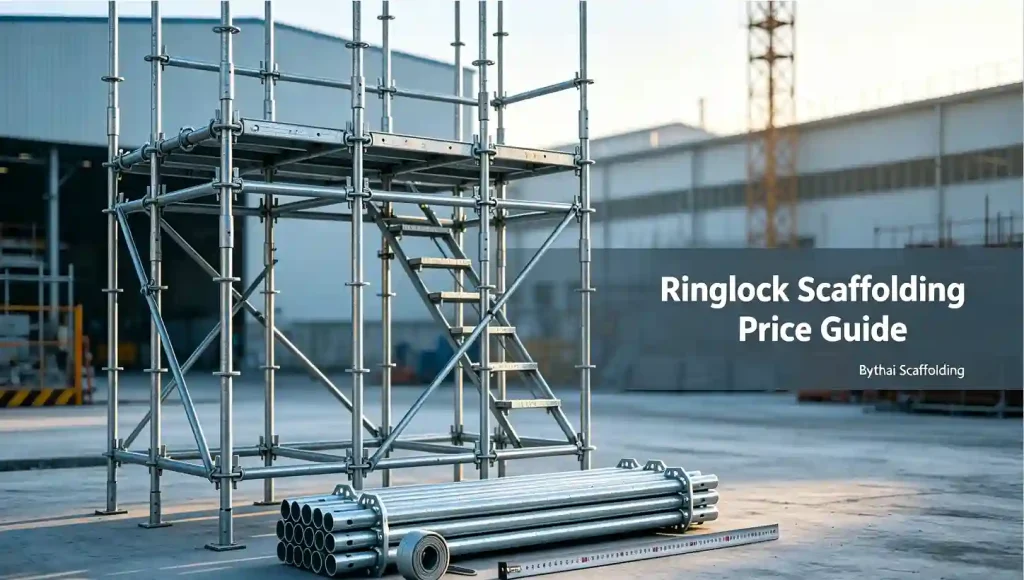
Often used in tandem with modular scaffolding systems (such as Ringlock or Cuplock scaffolding), these ladders are engineered to hook directly onto the scaffolding pipes or rest securely inside the tower structure. They provide a safe vertical path for workers traveling between different working platforms of a construction tower.
The Golden Safety Rules for Using Ladders at Heights
Even the highest-quality, most expensive industrial ladder can fail if it is used incorrectly. When deploying climbing equipment on a commercial site, your field supervisors should enforce these safety protocols daily:
The 4-to-1 Rule for Extension Ladders: For every four vertical feet of height to the point where the ladder contacts the wall, the base of the ladder should be placed one foot away from that wall. This creates a safe 75-degree climbing angle.
Maintain Three Points of Contact: When climbing up or down, workers must always keep either two hands and one foot, or one hand and two feet, firmly on the ladder structure. Tools should never be carried by hand while climbing; instead, use a tool belt, hoist, or utility bucket.
Never Stand on the Top Two Rungs: On a standard A-frame step ladder, the top two steps (and the top cap) are not designed for standing. Doing so severely compromises the user’s center of gravity and leads to tipping. If you need to reach higher, get a taller ladder or transition to a platform model.
The Three-Foot Extension Rule: If an extension ladder is being used to access an elevated work platform or a roof deck, the side rails must extend at least three feet (about one meter) past the support point to give workers a secure handhold when stepping off the ladder onto the platform.
Why Quality Engineering Matters for Your Bottom Line
When managing a commercial construction budget, it is tempting to cut costs by purchasing cheaper, unbranded utility ladders. However, low-quality climbing equipment is a major liability. Inferior welding, thin aluminum side rails, and weak rivets easily warp under heavy daily use, meaning you will end up replacing cheap ladders multiple times per year.
More importantly, investing in premium, certified climbing equipment reduces your legal and operational liability. High-grade industrial ladders from specialized manufacturers feature robust non-slip rungs, reinforced structural joints, and heavy-duty stabilizing bases that are built to withstand the harshest construction environments.
At Bythai Scaffolding, we understand that every piece of access equipment on your job site must perform under pressure. That is why our industrial ladders are engineered to meet strict commercial safety requirements, offering maximum stability, longevity, and peace of mind for your workers. Discover Our Full Range of Certified Industrial Ladders & Access Solutions!