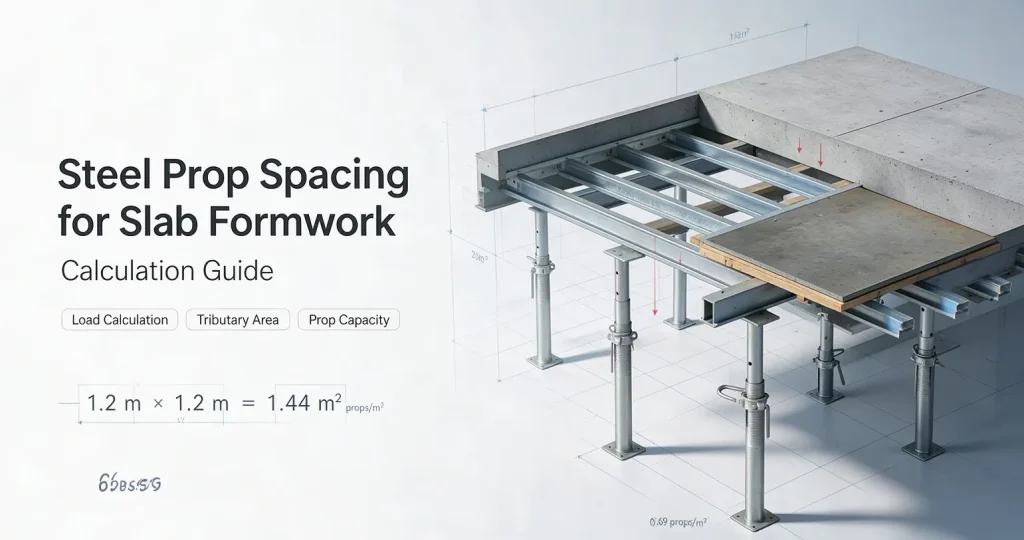
The security of the whole job site increasingly depends on temporary vertical supports in today’s concrete work and formwork shoring. Among these, adjustable steel props system also called shoring props/Acrow Props/screw props is one of the key component.
Although they seem like simple devices, the use of the incorrect type of steel prop can result in fatal structural failures, expensive project delays, and endangerment of workers. It is important for scaffolding suppliers to know the intricate technical details of load capacity, international safety standards, and surface-finish durability. This all-inclusive guide will take a deep dive into everything you need to know when looking for the right adjustable steel props for your next big commercial project. Looking for certified shoring solutions? Browse Bythai’s Full Range of Adjustable Steel Props and discover factory-direct pricing for your market.
1. Decoding Load Capacity: The Physics of Acrow Props
The primary metric for any adjustable steel prop is its safe working load (SWL) or ultimate load capacity. A common misconception in procurement is assuming a prop maintains a uniform load capacity throughout its entire adjustment range. In reality, a steel prop is weakest when it is fully extended.
The Slenderness Ratio and Buckling Risk
As the inner tube of an adjustable steel prop is extended out of the outer tube, the system’s slenderness ratio increases. Under heavy vertical tension, steel props do not typically fail from crushing; they fail from buckling (bending sideways).
When reviewing manufacturer specifications, always look for a detailed load chart that plots capacity against specific extension heights. For instance:
-
Fully Closed State: A standard heavy-duty prop closed at 1.7 meters might safely support up to 40 kN of vertical force.
-
Fully Extended State: When that same prop is telescoped out to its maximum height of 3.0 meters, its safe load capacity may drop to 20 kN or less due to the physics of structural leverage.
Steel Grades Matter: Q235 vs. Q355
The raw material utilized during manufacturing dictates the baseline strength of the tubing. High-quality scaffolding factories construct inner and outer sleeves from premium carbon steel:
-
Q235 Steel: The industry standard for light and middle-duty props, offering an excellent balance of ductility, weldability, and cost-efficiency.
-
Q355 Steel: A high-tensile alloy used for true heavy-duty shoring applications. Q355 steel allows thinner-walled tubes to achieve higher bending resistance, reducing the physical weight of the prop without sacrificing job-site safety. Need precise engineering data? Request the Official Bythai Prop Team Load-Capacity Charts to ensure your slab support meets local structural safety limits.
2. Global Variations and Regional Safety Standards
The global construction market does not use a single, universal design for Acrow Props. Instead, regional engineering traditions have established three primary configurations. Sourcing the correct regional type ensures perfect compatibility with local formwork systems and compliance with local building codes.
|
Adjustable Steel Prop Types |
|
|
European Style(EN 12811/Spanish/Italian Designs) |
Middle Eastern Style(Heavy-duty execution with open-thread adjustments) |
The European Standards (EN 12811)
In Europe and highly regulated markets, temporary works equipment and shoring components must comply with the EN 12811 standard. This classification categorizes scaffolding and shoring systems based on their structural load-bearing capacity (Load Classes 1 through 6) and variable load requirements, ensuring overall stability and rigorous safety factors at various structural heights and configurations.
-
Spanish Style Props (Light-Duty Configuration): Typically utilize a Ø48mm outer tube and a Ø40mm inner tube. They feature a lightweight, cost-effective design engineered to meet EN 12811 lower load ratings (such as Classes 1–3), making them ideal for standard residential concrete slabs and light scaffolding applications.
-
Italian Style Props (Heavy-Duty Configuration): Lean toward a more robust, heavier configuration, often utilizing a Ø56mm outer tube paired with a Ø48mm inner tube. This setup delivers significantly higher baseline load capacities to satisfy the strict requirements of EN 12811 higher load ratings (such as Classes 4–6), specifically designed for commercial masonry, heavy shoring, and high-load construction scenarios.
The Middle Eastern / American Style
Commonly preferred across the Middle East, parts of Asia, and North America, these props prioritize heavy-duty industrial execution. They generally rely on a Ø60.3mm outer sleeve and a Ø48.3mm inner sleeve. They are instantly recognizable by their robust, external open-thread design and high-torque cast steel collar nuts.
3. Critical Components That Prevent Structural Collapse
An adjustable steel prop system is only as strong as its weakest component. Beyond the main structural steel tubes, three minor components play a monumental role in maintaining job-site safety.
1. High-Torque Sleeve Nuts (Cup Nuts)
The collar nut transfers the immense vertical load from the inner tube down to the outer tube. Low-quality props often use cheap, stamped sheet-metal nuts that can crack or strip under pressure. Industrial-grade props utilize cast steel cup nuts with integrated handles. The threads must be cleanly machined to allow smooth micro-adjustments on-site, even when the prop is under full vertical tension.
2. Robust Locking Pins (G-Pins & Wire Pins)
The locking pin inserts through the pre-drilled holes of the inner tube, resting directly on top of the sleeve nut. It must be manufactured from high-strength solid steel bars. A bent or improperly rated pin is a primary cause of localized scaffolding collapse. Premium systems secure these pins with an attached wire lanyard to prevent them from being lost or dropped on active construction sites.
3. Built-in Safety Clearances (Anti-Injury Design)
Leading scaffolding producers use an engineered safety gap within the prop. When the inner tube is fully collapsed into the outer tube, a 100mm clearance gap exists at the top. This built-in stop is designed to keep the inner tube from falling completely to the bottom which means there is no risk of crushing a construction worker’s hands or fingers while dismantling. Quality lies in the details. Every Bythai shoring component undergoes strict multi-stage mechanical testing. Contact Our Engineering Team for Custom OEM/ODM Inquiries.
4. Surface Treatments: A Comparative Guide to Coating Lifespans
Because shoring props are constantly exposed to wet concrete, chemical release agents, rain, and high humidity, choosing the right surface finish is a make-or-break decision for long-term return on investment (ROI).
Powder-Coated Props
-
The Process: The steel tubes undergo a multi-stage cleaning process before an electrostatic anti-corrosion powder is applied and thermally cured in an oven to form a heavy-duty, resilient finish.
-
Pros & Cons: This option delivers exceptional long-term value. The cured powder layer is highly resistant to scratching and chipping during transport and rugged job-site handling. By completely sealing the raw steel against air and concrete moisture, it prevents both internal and external rust, extending the prop’s working lifespan to 5–7 years and maintaining structural integrity. (Note: It carries a slightly higher upfront cost than dip-painting, but significantly reduces replacement costs.)
Pre-Galvanized (Stripped) Steel
-
The Process: The tubes are manufactured from steel sheets that were galvanized at the mill prior to forming and welding.
- Pros & Cons: Offers a cleaner look and superior corrosion resistance compared to paint, with an average service life of 3–5 years. The main weakness lies along the welded seams, where the original zinc coating is burned away during manufacturing and must be manually sprayed over.
Electro-Galvanized Props
- The Process: The steel tubes are immersed in a zinc electrolyte solution, where an electric current applies a precise, uniform layer of zinc to the metal surface, creating a smooth and bright protective finish.
- Pros & Cons: This option balances mid-tier corrosion resistance with excellent cost efficiency, giving the props a sleek, professional appearance. The uniform zinc layer provides reliable protection against light moisture and scratching during standard onsite handling. However, because the protective layer is thinner than hot-dip galvanization, it is best suited for indoor applications or dry, non-aggressive climates, offering a typical working lifespan of 2–4 years.
Hot-Dip Galvanized (HDG)
-
The Process: After the entire steel prop is completely welded and assembled, it is submerged into a molten bath of zinc at temperatures around 450°C.
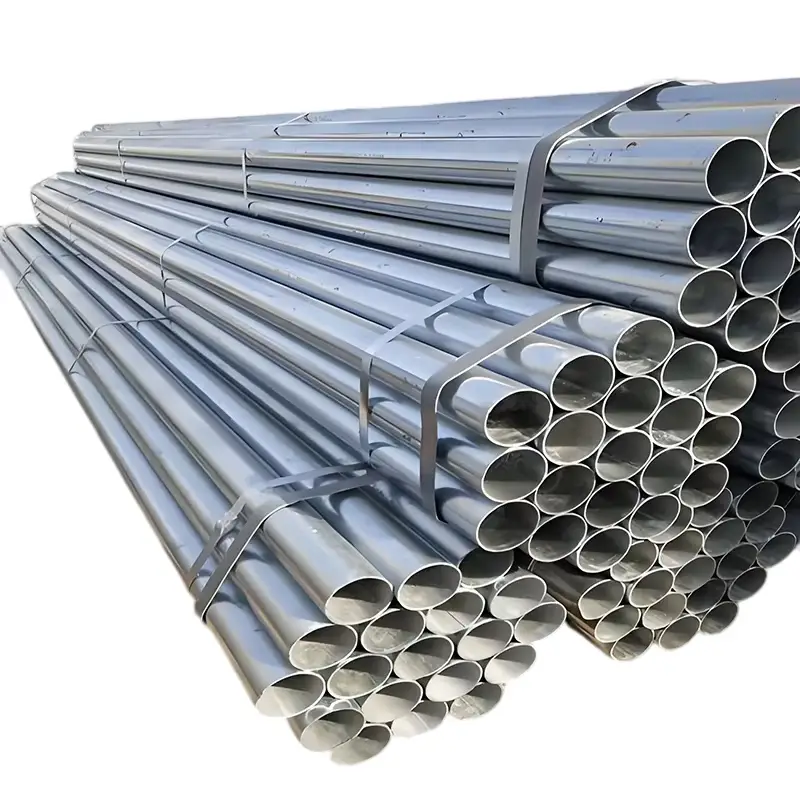
- Pros & Cons: HDG creates a thick, multi-layered metallurgical bond that coats both the exterior and interior walls of the tubes. This complete seal delivers elite protection against high-salinity coastal environments and harsh concrete chemistry. While the initial procurement cost is higher, an HDG prop easily achieves a reusable lifespan of over 10 years, offering the lowest total cost of ownership over its lifetime.
Conclusion: Balancing Cost with Job-Site Integrity
When sourcing an adjustable steel prop system, filtering suppliers solely by the lowest price tag is a dangerous procurement strategy. True value is found by balancing structural engineering metrics with long-term reusability. Ensure your supplier provides clear steel grade verifications, certified load charts matching your required extension heights, and robust surface finishes like hot-dip galvanization. By investing in precision-engineered Acrow Props, you safeguard not only your financial capital but the very lives of the crews standing beneath the slab. Ready to optimize your procurement costs? Don’t compromise on project safety. Get a Free, No-Obligation Factory Quote from Bythai today and secure premium scaffolding props tailored to your project schedule.