In the fast-paced world of industrial construction and temporary works, selecting the right equipment is not just a matter of compliance—it is a critical factor that directly influences site efficiency, worker safety, and long-term return on investment (ROI). Among the many temporary access decisions project managers and procurement officers must make, choosing between Aluminum Scaffolding Ladders and Steel Scaffolding Ladders (Staircases) remains one of the most frequent dilemmas.
Both materials have earned their place on modern job sites, yet they serve fundamentally different operational needs. Misaligning your material choice with your project’s specific demands can lead to premature equipment degradation, inflated logistics costs, or worst-case scenarios involving structural compromises.
This comprehensive guide breaks down the engineering metrics, structural capabilities, and financial trade-offs of aluminum versus steel scaffolding ladders to help you make an informed procurement decision for your next project.
1. Structural Load-Bearing Capabilities & EN 12811 Compliance
When evaluating vertical access solutions, structural integrity under load is the primary engineering benchmark. Under the European standard EN 12811 (which regulates temporary works equipment and access systems), scaffolding structures and their access components are categorized into distinct Load Classes (Classes 1 through 6) based on maximum allowable uniformly distributed loads.
Steel Ladders: Built for Heavy-Duty Class 4–6 Demands
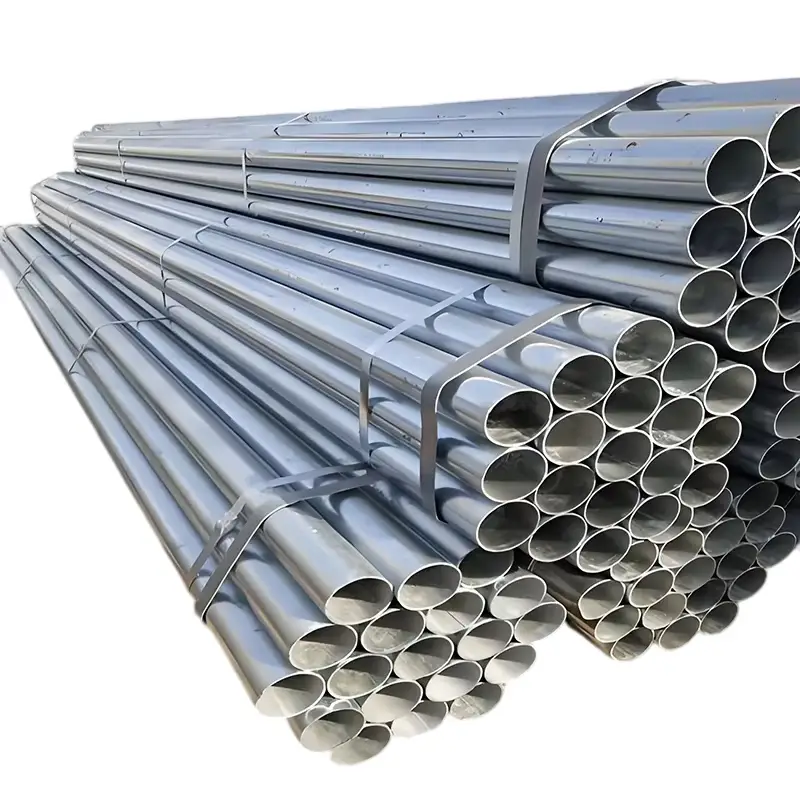
Industrial steel ladders, typically manufactured from high-grade structural steel such as Q235, possess immense yield strength, featuring a minimum yield strength of 235 MPa. This exceptional rigidity makes them the definitive choice for high-traffic construction zones, commercial masonry, and heavy industrial scaffolding.
-
Load Handling: Steel access systems easily accommodate the strict requirements of EN 12811 higher load ratings (Classes 4–6).
- Application: They are engineered to withstand not only the weight of multiple workers ascending simultaneously but also the heavy tool belts, equipment, and masonry materials frequently transported up vertical structures. Steel does not deflect easily under cyclic loading, preserving structural geometry over years of rugged use.
Aluminum Ladders: Optimized for Light-to-Medium Duty
Aluminum scaffolding ladders offer an excellent strength-to-weight ratio, but they operate under different structural limitations compared to their heavy-duty steel counterparts.
- Load Handling: They are primarily designed to meet lower load ratings, aligning with EN 12811 Classes 1–3.
Application: Aluminum is ideal for standard residential concrete slabs, light maintenance operations, painting, and interior finishing work. While highly resilient, aluminum components will exhibit greater deflection than steel when subjected to extreme localized loads, making them unsuitable for heavy material transport or high-density crews.
2. On-Site Ergonomics, Weight, and Logistics
The physical weight of your access equipment dictates how quickly a scaffolding system can be erected, dismantled, and transported between job sites.
|
Metric / Feature |
Aluminum Scaffolding Ladders |
Steel Scaffolding Ladders (Q235/Q195) |
|
Average Weight |
Ultra-lightweight (approx. 35–45% of steel) |
Heavy-duty, dense structural mass |
|
Erection Speed |
Fast, minimal crew fatigue |
Requires multi-person handling or cranes |
|
Freight Costs |
Lower shipping costs per volume unit |
Higher shipping costs due to tonnage limits |
|
EN 12811 Rating |
Typically Class 1–3 (Light-to-Medium Duty) |
Typically Class 4–6 (Heavy-Duty) |
Aluminum’s primary commercial advantage is its lightweight profile. An aluminum ladder can be effortlessly handled, positioned, and secured by a single worker. This drastically reduces crew fatigue during long shifts and accelerates the overall assembly timeline of modular or ringlock scaffolding towers. From a logistics perspective, lower deadweight allows procurement managers to maximize freight volume without instantly hitting transport tonnage limits, cutting down shipping and relocation expenses.
Conversely, steel ladders—whether fabricated from robust Q235 or highly formable Q195 steel—require greater physical effort or mechanical assistance (such as site cranes) to hoist into place. However, on long-term commercial sites where the scaffolding tower remains static for months, the initial labor investment required for erecting heavy steel stairs is offset by the unmatched stability and security they provide over the project’s life cycle.
3. Surface Treatments and Environmental Resilience
Construction environments are notoriously volatile. Access equipment is routinely exposed to wet concrete, aggressive chemical release agents, torrential rain, and high humidity. Without appropriate material properties or surface finishes, corrosion will rapidly degrade structural safety.
The Aluminum Edge: Natural Passivation
Aluminum naturally forms a protective oxide layer when exposed to air, giving it excellent baseline resistance to atmospheric moisture and mild chemical exposure. It will not rust in the traditional sense, making it a highly reliable choice for outdoor coastal projects or wet concrete forming where maintenance intervals are minimal.
The Steel Solution: Advanced Coatings
Raw steel requires industrial surface treatments to survive the job site. The longevity of a steel ladder is directly tied to the technology used to coat it:
-
Hot-Dip Galvanized (HDG): This process involves submerging the fully welded steel ladder into molten zinc at around 450°C. It creates a thick, multi-layered metallurgical bond coating both the exterior and interior walls of the steel tubes. HDG steel ladders deliver elite protection against high-salinity environments and harsh concrete chemistry, easily achieving a reusable lifespan of over 10 years.
-
Powder-Coated: Electrostatic powder is applied to the steel and thermally cured in an oven. This creates a dense, resilient, scratch-resistant barrier. It protects against internal and external rust, extending the working lifespan to 5–7 years while allowing for brand color-coding.
Electro-Galvanized: A thinner, uniform zinc layer applied via electric current. This budget-friendly option offers a professional, bright finish with a lifespan of 2–4 years, making it best suited for indoor applications or dry climates.
5. Financial Evaluation: Upfront Capital vs. Total Cost of Ownership (TCO)
To maximize your long-term return on investment (ROI), procurement strategies must look beyond the initial purchase price tag and analyze the Total Cost of Ownership (TCO).
-
Aluminum Ladders carry a higher initial raw material cost due to global aluminum market premiums. However, they reduce operational costs through rapid erection times, lower labor requirements, and reduced freight expenditures. They are highly efficient for fast-turnaround projects or rental fleets targeting residential builders.
Steel Ladders (specifically Hot-Dip Galvanized models) represent a highly efficient long-term capital investment. While their initial procurement and shipping costs are higher due to their weight, their sheer durability ensures they can be reused across dozens of consecutive heavy commercial projects spanning a decade. When calculated on a “per-year of service” basis, HDG steel provides the lowest total cost of ownership in the industry.
Conclusion: Which is Best for Your Next Project?
The decision between aluminum and steel scaffolding ladders ultimately hinges on your project’s engineering profile:
-
Choose Aluminum Scaffolding Ladders if your priorities are rapid assembly, one-man handling, reduced transport costs, and light-to-medium duty applications (EN 12811 Classes 1–3) such as residential builds or light maintenance.
-
Choose Steel Scaffolding Ladders/Staircases if your site involves high-volume worker transit, heavy material movement, severe weather exposure, or high-load commercial masonry (EN 12811 Classes 4–6) where a service life exceeding 10 years is required to maximize asset utilization.
By balancing structural engineering metrics with long-term reusability, you ensure both job-site integrity and a healthy bottom line.